Dealership service department calls: what to answer
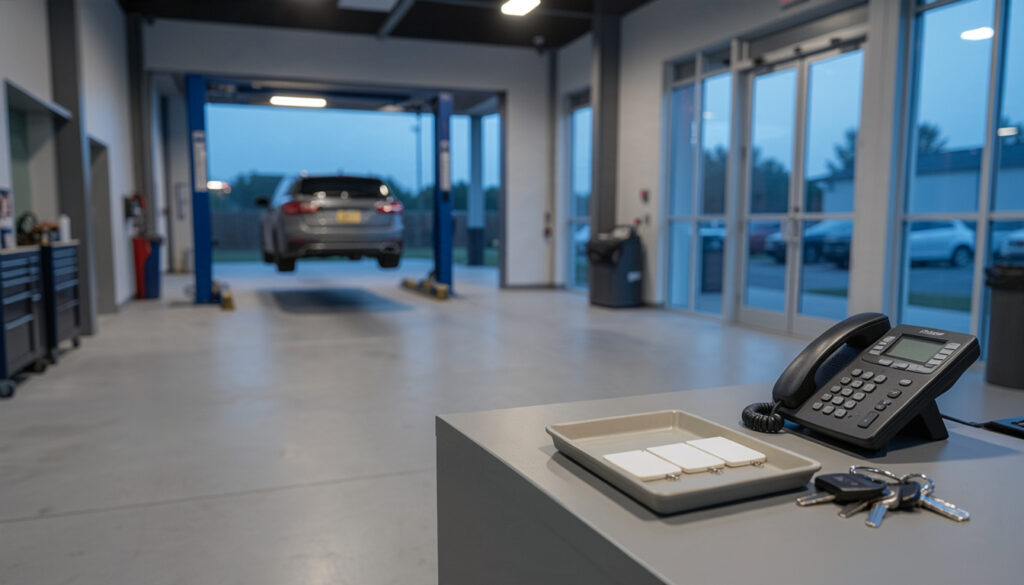
The service phone rings while the advisor is writing up the customer standing at the counter. If they pick it up, the person in front of them waits. If they let it ring, the caller tries another shop. Many dealership service department calls are not hard. The same few questions come in all day, and many of them can be settled without pulling an advisor off the drive.
The trick is sorting them. Some calls can be answered on the spot. Some need details written down so a person can act on them. And some only your advisors should touch. This guide walks through all three.
Why dealership service department calls deserve a plan
A service call is rarely just a service call. In the 2026 Cox Automotive Fixed Operations and Ownership Study, 88% of consumers said the service experience affects how likely they are to buy from that dealer again. The phone is often the first part of that experience. A caller who waits on hold, or gets voicemail on a Saturday, has already started forming an opinion.
The fix is not asking advisors to answer faster. It is deciding ahead of time which calls need an advisor at all.
What service customers call to ask
Listen to a day of service calls and the same questions come back:
- Are you open Saturday? What time does service close tonight?
- How much is an oil change, a tire rotation or a brake inspection?
- Do you work on other brands, or only the ones you sell?
- Do you have loaners or a shuttle? Can I wait while it is done?
- Can I drop the car off after hours? Where do the keys go?
- Can I book an appointment for Thursday morning?
- Is my car ready? Did you find anything else?
- Is this covered under my warranty?
Read that list again and sort it. The first five are facts about your store. The sixth is a request. The last two belong to a person who can see the repair order.
Answer on the spot: what your knowledge base can settle
Questions about your hours, your location and your rules have one right answer, and it does not change from caller to caller. Write those answers down once and every call gets the same reply. A good service desk knowledge base covers:
- Service hours, including Saturdays and the holidays when the shop closes early or stays shut.
- Where to go: the service entrance, the drive-in lane and where to park.
- After-hours drop-off: whether you allow it, and exactly how the key drop works.
- Transportation: your shuttle area, your loaner rules and whether customers can wait on site.
- Which vehicles you service, stated plainly, so nobody drives in only to be turned away.
- What to bring: keys, the wheel lock key and any paperwork you need.
Price questions
Price is the question callers most want answered and staff most want to avoid. Many people assume the dealer costs more. The same Cox Automotive study found that the average dealership service spend was $261, against $275 at general repair shops, yet many consumers still see the dealer as the more expensive option. A caller who hears a real price for routine maintenance has one less reason to call around.
So publish the prices you are comfortable quoting: common maintenance items, or a starting price with what changes it. For anything that depends on a diagnosis, the honest answer is that a technician has to look at it first. Say that, then offer to set up the visit.
Write it down: what a service appointment request needs
A booking request is only useful if the advisor who picks it up does not have to call back to ask basic questions. Capture the same details every time:
- The customer’s name and the best number to reach them.
- The vehicle: year, make and model.
- What it needs: the maintenance item, or the symptom in the customer’s own words.
- The day and time they would like.
- Whether they will wait, drop it off or need transportation.
Then read it back. Confirming the request on the same call or in the same thread catches a wrong day or a misheard model before it reaches the shop. If you already use a phone script on the sales side, the same answer-then-ask pattern works here. Our car dealership phone script shows how it sounds on a call.
Hand it to a person: the calls only advisors should answer
Some questions should never get a guessed answer. They depend on the repair order, the technician’s findings or a judgment call:
- “Is my car ready?” The answer lives with the advisor and the shop, not in a list of store facts.
- Estimates and approvals. The customer is deciding whether to spend money. They need someone who can explain the findings.
- Warranty and coverage. Whether a repair is covered depends on the vehicle and the failure. That is the advisor’s call.
- Diagnosis over the phone. “It makes a noise when I turn” deserves an appointment, not a guess.
- Complaints and invoice questions. An upset customer should reach a person who can fix the problem.
For these calls, aim for a clean handoff. The customer knows who will follow up, and the advisor gets a note of what was already said, so nobody has to ask twice. We cover how that handoff should work in AI receptionist human handoff: when a person steps in.
How Hello360 handles service department calls
Hello360 is an AI front desk that knows your business. It picks up the call with no menu and no hold music and says it is an assistant at the start of the call. It answers from your knowledge base: your hours, prices, inventory and rules. It does not answer from the internet. When your knowledge base does not say it, it does not make it up.
- It answers the facts. That means hours, drop-off, transportation and the prices you chose to publish, in English, Portuguese or Spanish, 24 hours a day.
- It takes down what a booking or a callback needs. Then it triages and classifies the call as a lead, a booking or a question, and sends it where your team already works.
- It hands off instead of guessing. What it cannot answer goes to a person on your team, and anyone on your team can take over a conversation at any time.
- It reports what it missed. Unanswered questions come back to you as a short list, so you can add the answers to your knowledge base.
The same knowledge base answers on text message, WhatsApp, your website chat and social, so a customer who texts about Saturday hours gets the same answer as a caller. Update your hours once and every channel follows. You can see how the voice side works on the Hello360 phone page.
Let the advisors work the drive
Dealership service department calls get easier once you separate the facts, the requests and the judgment calls. Write the facts down once. Capture requests the same way every time. Send the rest to the people who can see the repair order. Your advisors stay with the customer at the counter, and the caller still gets an answer.
Want to hear your own service questions answered from your own hours and prices? Book a demo.
Frequently asked questions
What do customers usually ask when they call a dealership service department?
The common calls are about hours, prices for routine maintenance, transportation, drop-off rules and booking an appointment. Other callers ask about a vehicle already in the shop, an estimate or warranty coverage. You can answer the first group from written store facts. The second group needs an advisor.
Should an AI front desk answer “is my car ready” calls?
It should not guess. The status of a repair depends on the repair order and the technician, so the right move is to take the customer’s name and vehicle and hand the call to an advisor. Hello360 sends what it cannot answer to a person on your team.
Can an AI front desk book service appointments?
Hello360 takes down what a booking needs: the name, contact, vehicle, the work and the preferred time. It then files the call as a booking for your team. To see how that fits the way your service lane schedules, ask during a demo.
How should a service department quote prices over the phone?
Quote only what you are comfortable publishing: fixed prices for common maintenance, or a starting price with what changes it. For anything that depends on a diagnosis, be honest. A technician has to look first, and the caller can book that visit.
How do you handle service calls after hours?
Decide what the caller needs to hear when nobody is in the shop: your hours, your key drop rules and how to request an appointment. Hello360 answers calls 24 hours a day from your knowledge base, takes down booking requests and passes the rest to your team.