Car dealership phone script: answer, then ask
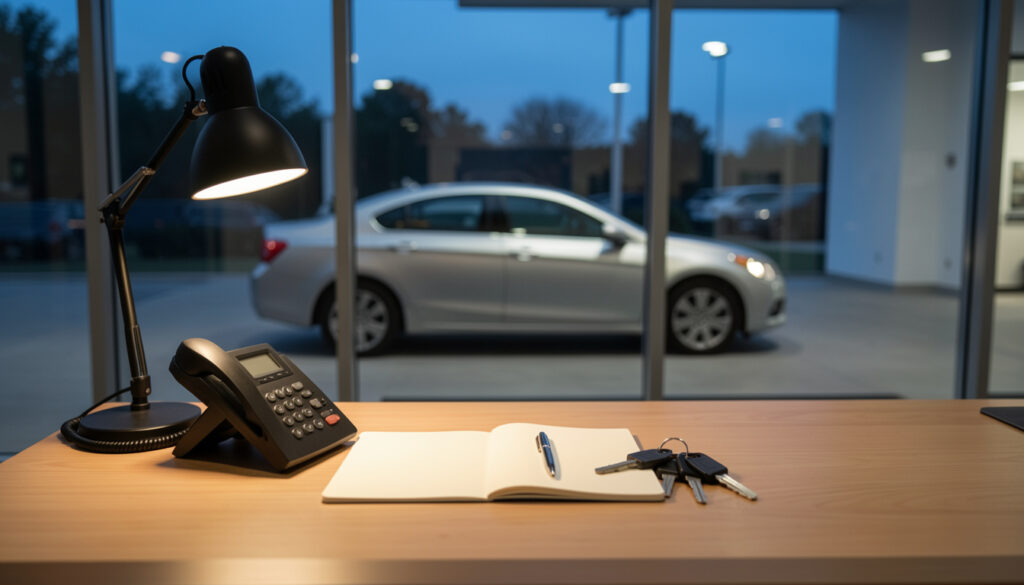
A car dealership phone script has one job: make sure the buyer who calls gets the same good call no matter who picks up. Most scripts you find online are built to keep control of the caller. Dodge the price, hold back the answer, push for the appointment. Buyers notice. The script below works the other way around: answer the question that was asked, then ask for what the sale needs.
Why the inbound sales call still matters
The phone is where a serious buyer raises a hand. In a review of about 44.4 million inbound dealership calls from the first half of 2026, sales calls grew from 23% to 26% of inbound call volume. The same mid-year review found that dealerships invited the caller to visit on just 53.6% of sales calls, against 69% at top-performing stores.
And the calls that never connect hurt the most: 64% of sales customers who could not reach someone at the dealership never called back. A script cannot fix a phone nobody picks up. It can make sure every call that does connect ends with a next step.
The car dealership phone script, in four moves
Keep the structure short enough that anyone on the floor can run it from memory. Four moves cover almost every sales call.
- Greet. Say where they reached and who is talking. “Thanks for calling [Dealership], this is [Name]. How can I help?” No pitch, no list of this month’s specials.
- Answer. Answer the literal question with real facts from your inventory, hours and pricing. If you do not know, say so and say who will know.
- Ask. One question at a time: their name, the best number to reach them, the vehicle they want, and when they would like to come in.
- Confirm. Repeat back what happens next. An appointment time, or who will call back and about what. Then invite them in.
The order matters. A caller who gets a straight answer first is far more willing to give a name and number. A caller asked for a phone number before getting any answer often hangs up and calls the next store.
Word tracks for the calls you get every day
Most sales calls are one of a handful of questions. Write a word track for each, using what your store actually has and actually does.
“Is this car still available?”
“Yes, the silver sedan you saw online is on the lot right now. Would you like to see it today or tomorrow? Can I get your name so the sales team knows you are coming?”
If it sold, say so plainly, then offer the closest match you really have in stock. Never keep a sold car alive to get someone through the door. We go deeper on this one in how to answer “Is this car still available?”
“What is your best price?”
“The listed price is [price]. What changes the final number is your trade, how you pay and taxes and fees. If you share a few details, I can have [Name] put the full numbers together for you.”
Refusing to give any price is what many scripts teach, and it is what makes a caller feel handled. Give the number you advertise, explain what moves it, and turn the rest into a reason to follow up.
“What is my trade worth?”
“I would rather not guess and be wrong. Can you tell me the year, make, model and mileage? Then we can set a time for an appraisal while you are here.”
A guessed number becomes a promise in the buyer’s mind. Capture the details and book the appraisal instead.
“Can I get financed?”
“Our finance team can walk you through the options. I cannot tell you on this call whether you will be approved, but I can have them reach out. What is the best number for them?”
Never promise approval or a rate on the phone. Explain how your process works, then hand the caller to the people who make that call.
“Are you open on Sunday?”
“We are open Sunday from [hours], at [address]. Is there a car you would like to have ready when you arrive?”
The easiest question to answer is also the easiest to lose. A short answer plus one question turns a store-hours call into a visit.
What the script should never do
- Put the buyer on hold to check the lot. Whoever answers the phone should be able to see the inventory.
- Guess. Not on trade values, not on approvals, not on whether a car is still there.
- Ask for contact details before answering anything. Earn the number with a real answer first.
- End without a next step. Every sales call should close with an appointment, a callback with a name attached, or a clear reason why neither fits.
- Change with the person answering. If the price, hours or policy depends on who picked up, the script is not doing its job.
What to capture before the call ends
The script is only half the call. The other half is what lands in your CRM afterward. Before hanging up, make sure you have:
- The caller’s name and the best number to reach them
- The vehicle they asked about, or what they are looking for
- Whether they have a trade, and its basic details
- When they want to come in, or when they expect a callback
- The language they prefer
- Any question you could not answer, so someone follows up on it
Log it while the call is fresh. A note written at the end of the shift from memory is where good leads go to die.
When nobody is free to run the phone script
The best script in the world does nothing for the call that rings at 9 pm, on a holiday, or while every salesperson is with a customer. Many of those callers never call back, as our post on dealership missed calls covers.
That is the call Hello360 is built for. The Hello360 phone channel picks up and says it is an assistant at the start of the call. It answers from your knowledge base (your hours, inventory, prices and rules), not from the internet. Then it asks for what a callback or an appointment needs, in English, Portuguese or Spanish, without asking the caller which.
- The call is filed as a lead, a booking or a question, and the lead goes to your CRM.
- What it cannot answer goes to a person on your team, instead of a guess.
- Questions it could not answer come back to you as a short list, so your knowledge base learns them.
- Anyone on your team can take over a conversation, any time.
Before it goes live, you read its answers and fix any that do not sound like your store. In practice, that review is your phone script. And because every channel reads the same knowledge base, the buyer who texts or uses the website chat gets the same price and the same hours as the buyer who calls.
Run the same script on every call
A good car dealership phone script is short: greet, answer, ask, confirm. It answers the question first, never guesses, and always ends with a next step written into your CRM. Write it down, keep it current with your inventory and hours, and make sure it runs at 9 pm the same way it runs at noon. Want to hear how that sounds with your own inventory? Book a demo.
Frequently asked questions
What should you say when answering the phone at a car dealership?
Say the dealership’s name, your own name and offer to help, then stop talking. Skip the specials and the sales pitch in the greeting. The caller already has a question, and the fastest way to build trust is to let them ask it and answer it directly.
Should a car dealership give a price over the phone?
Give the price you advertise, because the buyer has probably already seen it online. Then explain what changes the final number, such as a trade, financing, taxes and fees. Use those details as the reason to set an appointment or a callback, not as a reason to dodge the question.
What is a phone up in car sales?
A phone up is an inbound call from a shopper asking about a vehicle, a price or the store. It is usually a buyer who has already done research online. The goal of the call is a clear next step, ideally an appointment to visit.
How do you turn an inbound sales call into an appointment?
Answer the question first, then ask one question at a time: name, number, vehicle and a time to visit. Offer two specific options, such as today or tomorrow, instead of an open-ended invitation. Confirm the time out loud and log it in your CRM before the next call.
Can an AI front desk follow a dealership phone script?
Hello360 answers from your knowledge base, so it says what your store has written down about inventory, hours, prices and rules. Before it goes live, you read its answers and fix any that do not sound like your business. What it cannot answer goes to a person on your team.