Restaurant private dining inquiries: what to answer
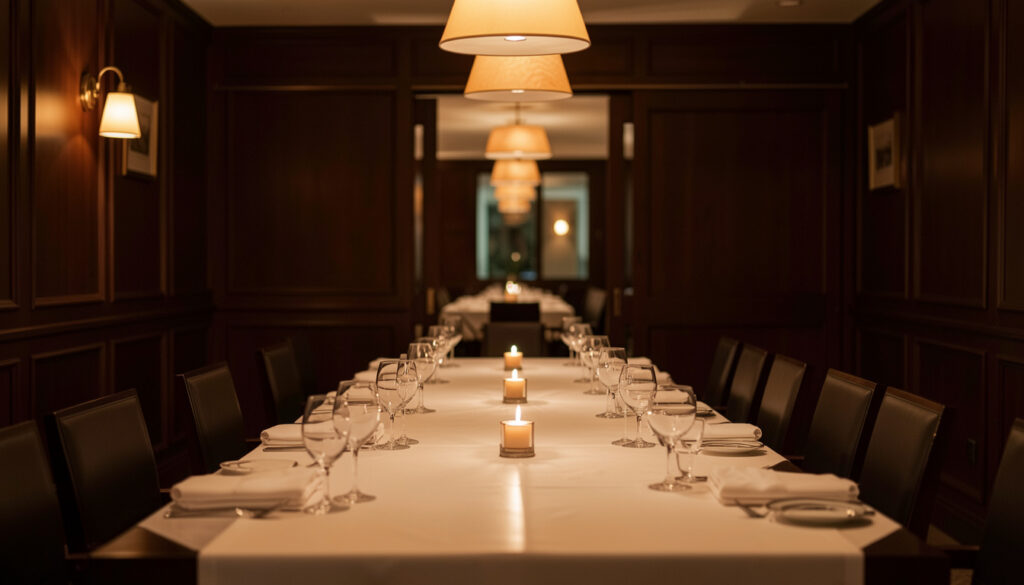
A private dining request rarely shows up at a good time. It arrives as a call during the Friday rush, a text at 10 pm or a DM under a photo of the back room, from someone planning a night that matters to them. With restaurant private dining inquiries, a clear first answer keeps the guest talking, and a vague one sends them to the next restaurant on their list. This guide covers what guests ask, how to write answers your whole team can give the same way, and what to capture before your events manager takes over.
Why restaurant private dining inquiries need their own playbook
Demand is moving this way. According to OpenTable’s guide to private dining, group dining for parties of six or more rose 11% year over year in 2025, 36% of Americans would like to see more group and private dining in 2026, and private dining inquiries on OpenTable more than doubled in the past year.
A private event inquiry is also a different conversation from a table request. A regular reservation needs a date, a time and a party size. A private event needs a budget conversation, a menu decision, a deposit and often a signed agreement. If the first person to answer does not know the room minimum or how deposits work, the guest hears “someone will call you back” and keeps shopping.
If you already have a large party reservation policy, start there. Private dining is the next step up, with more money and more questions attached.
The questions guests ask before they book a private room
Most questions fall into a short list. Write one approved answer for each, and everyone who picks up the phone or opens a message says the same thing.
Space and privacy
- How many people fit? Give seated and standing capacity separately, for each room or area you book.
- Is it fully private? Say plainly whether the space is a closed room, a semi-private section or a full buyout, and whether other diners will hear a toast or a speech.
- Is it accessible? Steps, restrooms and parking belong in the answer.
Money
- Is there a room fee or a minimum spend? Name which one you use, and whether it changes by day of the week or season.
- What does the quoted number cover? Say whether tax, gratuity and service charges sit inside the minimum or on top of it.
- How does the deposit work? How much, when it is due, whether it goes toward the bill and when it stops being refundable.
Menu and drinks
- Can we order from the regular menu? Or only from set menus, family-style options or a reception menu.
- How do drinks work? Packages, a running tab, a cash bar or wine pre-selected with the menu.
- Can we bring a cake or our own wine? State the policy and any fee that comes with it.
Timing and logistics
- Which dates and time slots can we book? Some restaurants only take events at lunch, early evening or on certain nights.
- How long is the room ours? Say when the event has to end and what happens if the party runs late.
- What can we bring in? Decorations, music, a microphone, a screen for a presentation.
- When do you need the final guest count? Give the deadline and what happens if numbers change after it.
Minimum spend, room fee and deposit: one way to say it
These three terms get mixed up constantly, often because staff use them interchangeably. Define each one in your policy, then use the same words everywhere.
- Room fee: a flat charge for the space itself, separate from food and drinks.
- Minimum spend: the amount the party commits to spend on food and beverage. Say what happens if the final bill comes in under it.
- Deposit: money paid up front to hold the date. Say whether it applies to the final bill and when it becomes non-refundable.
Then write the answer the way a guest will hear it, with your own numbers in the brackets:
Our private room seats [number] guests. On Friday and Saturday evenings there is a food and beverage minimum of [amount], before tax and gratuity. A deposit of [amount] holds the date and goes toward your final bill. It is refundable until [number] days before the event.
If you are still setting the number for a full buyout, the same OpenTable guide describes a common approach: base the minimum on what you would normally take during that daypart, factor in staffing, then adjust for season and demand.
What to capture before the events manager calls back
Some questions should not be settled at the first touch: custom menus, discounts, holding a date, anything that goes into a contract. The job of the first answer is to make the events manager’s callback short.
- Date and a backup date. Flexibility often decides whether the event happens.
- Guest count range. A range is fine at this stage, as long as it tells you which room fits.
- Occasion. A birthday dinner and a client presentation need different setups.
- Time window. Start time and how long they expect to stay.
- Menu format and budget. Seated dinner, family style or a standing reception, and roughly what they plan to spend.
- Dietary needs. Allergies and restrictions known so far.
- Contact details. Name, phone, email and the best way to reach them.
For events held somewhere else, our guide to restaurant catering inquiries covers what changes when the food leaves the building.
Where the first answer ends and a person steps in
Draw the line in writing. Facts you have decided on, such as capacity, minimums, deposit terms, cancellation rules and how far ahead to book, can be answered by anyone at any hour. Decisions, such as holds, exceptions and a custom quote, go to a person, together with everything the guest already said, so nobody asks the same questions twice. For more on where that line sits, read when a person should step in.
How Hello360 answers private dining questions
Hello360 is an AI front desk that answers your restaurant’s calls, texts, WhatsApp, website chat and social messages, 24 hours a day, in English, Spanish and Portuguese. It answers from your knowledge base: your hours, menu, prices and rules. Put your private dining policy in your knowledge base, and every channel gives the same answer about capacity, minimums and deposits.
- It answers what you have written down. When your knowledge base does not cover a question, it does not make up an answer. It points the guest to your team and lists the question for you, so the answer can go into your knowledge base.
- It asks for what the callback needs. Date, party size, occasion and contact details, asked once, in the language the guest uses.
- It triages and routes. A private event inquiry is filed as a lead and sent on to your team through Zapier. A regular table request becomes a booking in OpenTable or Toast.
- It hands off. What it cannot answer goes to a person on your team, and anyone on your team can take over a conversation at any time.
- One update, every channel. Change your holiday minimum once, and every channel follows.
Answer the inquiry while the guest is still planning
A private dining inquiry is a guest asking you to host a night that matters. Write the policy, give it one set of words, decide what a person handles, and make sure the question gets the same answer at 10 pm as it does at noon. To watch Hello360 answer a private dining question from your real menu and rules, Book a demo.
Frequently asked questions
What information should a private dining inquiry include?
The date and a backup date, a guest count range, the occasion, the time window, the menu format and budget, any dietary needs, and contact details. With those, your events manager can check availability and send a proposal without a second round of questions.
What is the difference between a minimum spend and a room fee?
A room fee is a flat charge for using the space. A minimum spend is the amount the party commits to spend on food and beverage, and your terms say what the guest pays if the bill falls short of it. Some restaurants use one, some use both, so say which applies and whether tax and gratuity count toward it.
Should a restaurant publish its private dining prices?
Sharing the basics up front saves time on both sides. OpenTable recommends stating capacity, any minimum spend or room hire fee, deposits, cancellation terms and how far ahead guests need to book on your private dining page. Guests who already know the numbers send inquiries that are ready to move forward.
How far in advance should guests book a private dining room?
It depends on the room, the night and the season, and holiday dates tend to go first. Decide your own lead time and your final guest count deadline, write them into your policy, and give the same answer on every channel.
Can an AI front desk handle private dining inquiries?
It can answer what your policy already says and collect the details your team needs. Hello360 answers from your knowledge base, files the inquiry as a lead and hands what it cannot answer to a person on your team. Decisions such as holds, exceptions and custom quotes stay with your events manager.