Restaurant catering inquiries: what to ask and answer
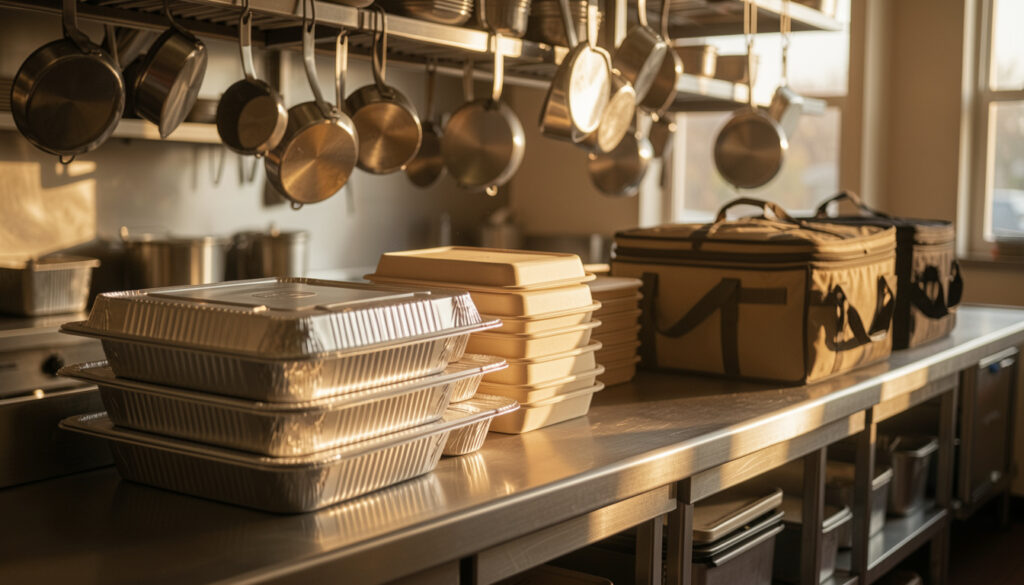
Restaurant catering inquiries rarely arrive at a good time. A text asking about lunch for an office lands in the middle of the dinner rush. A DM asks whether you deliver trays to a business park. A caller wants to know your minimum, and the one person who knows it is already on another line. Each of these is a large order waiting to happen, and each one is easy to lose in the same inbox as “Are you open Sunday?”
This guide covers what to capture from every catering request, which questions to answer before anyone has to ask, and where an AI front desk fits, so the inquiry reaches your team with the details already in hand.
Why restaurant catering inquiries are worth answering well
A catering request is not a typical check. Reporting on a 2026 industry study of catering sales, Food On Demand noted that average catering order values reached about $416 in 2025, and that 60 percent of catering orders came from just 5 percent of customers. The second figure matters as much as the first. The office manager who orders once and has a good experience is the one who orders again.
The trouble is where these requests show up. They rarely come through a dedicated catering line. They come through the same phone, text thread, WhatsApp chat, website and social inbox as every other guest question, often from someone planning at a desk in the afternoon or on a couch late at night. When the reply waits until someone is free, the planner moves on to the next restaurant on the list.
What to capture from every catering request
An inquiry only becomes a quote when you have enough to price it. Most of the back-and-forth comes from missing details, so decide what you need and ask for it in one pass:
- Name and the best way to reach them. A phone number or email, and whether they are ordering for a company.
- Date and ready time. When the food needs to be ready or delivered, not when the event starts.
- Headcount. An estimate is fine at first. Just note that it is one.
- Pickup or delivery. For delivery, the address and any building or parking instructions.
- What they have in mind. A package from your catering menu, a rough budget per person, or simply the occasion.
- Dietary needs and allergies. How many vegetarian, gluten-free or allergy-sensitive guests to plan for.
Allergies deserve their own process, because a catering order feeds people who never spoke to you. If you already have rules for how your team handles those questions, apply the same ones here. Our guide to answering restaurant allergy questions walks through them.
Answer the standard questions before anyone asks
Most catering conversations stall on the same handful of questions. Write the answers down once, and make sure everyone who touches the phone or the inbox gives the same ones:
- Your minimum order or minimum headcount
- How much notice you need, and whether you take same-day requests
- Your delivery area, delivery fee and setup options
- Deposit, payment and cancellation terms
- What is included: plates, utensils, serving equipment, staff
- Which dishes travel well, and which ones you do not cater
If those answers live only in the manager’s head, the guest hears something different depending on who picks up. The same goes for your everyday questions, which is why it helps to treat catering as one more section of your restaurant FAQ rather than a separate conversation.
Catering or a large party? Triage first
“We need food for a big group on Saturday” can mean two very different things. That group at tables in your dining room is a reservation, with its own rules on deposits and set menus. The same group eating boxed lunches at an office is a catering order. Mixing them up wastes a callback at best and books the wrong thing at worst.
The first question is simple: are they eating here or somewhere else? The answer sends the request down the right path. If you are still deciding how to handle big tables, see what to put in a large party reservation policy.
How an AI front desk handles restaurant catering inquiries
Hello360 is an AI front desk that answers on the phone, by text message, on WhatsApp, on your website and on social, 24 hours a day, in English, Spanish and Portuguese. For catering, what matters is what it does with the question once it arrives.
It answers from your knowledge base
Everything it says comes from your knowledge base: your hours, menu, prices and rules, including the catering minimums, notice and delivery terms you wrote down above. You update it once, in one place, and every channel starts saying the same thing. If your menu lives in Toast, it can come from there. When a question is not covered, it says so instead of making up an answer.
It asks once for what the request needs
Instead of a reply that says “call us during business hours,” the guest gets an answer and a short set of questions. A late-night text might go like this:
Guest: “Do you cater? We need lunch for our office next Wednesday, delivered.”
Front desk: “Yes, we cater, and we deliver in your area. To get a quote started, can I have your name, a phone number, the delivery address and roughly how many people?”
It answers in the language the guest wrote in, and confirms what was asked in the same thread.
It files the request where your team works
Once the details are in, the conversation is filed as a lead, not left as a message someone has to retype. The lead goes on to your team through Zapier, so whoever handles catering sees who asked and what they asked for, in one place.
It hands off what needs a person
Custom menus, tastings and quotes for big events still need someone who can make a decision. What it cannot answer goes to a person on your team, and anyone on the team can take over a conversation at any time. The questions it could not answer come back to you as a short list, so the answer can go into your knowledge base for next time.
Setting it up starts with what you already have
You do not need to build a catering program from scratch. The Hello360 team builds your knowledge base with you from what you already have: the catering menu, the minimums, the delivery rules and the terms you repeat on every call. Before it goes live, you read its answers and fix any that do not sound like your restaurant.
From there, a change in one place reaches every channel. Raise a delivery fee or add a new package, and the phone, the text thread and the website chat all give the new answer.
Turn every catering question into a clear next step
Restaurant catering inquiries are large orders waiting to happen, and they are easy to miss. Write down the answers you already give, decide what you need to capture, and separate catering from large-party reservations. Then make sure someone, or something, answers on every channel while your team works the floor.
Want to see how Hello360 would answer your catering questions with your real menu and rules? Book a demo.
Frequently asked questions
How quickly should a restaurant respond to a catering inquiry?
While the guest is still deciding, since a planner can easily ask more than one restaurant. The first reply does not need to be a full quote. It needs to answer the basics, such as minimums, notice and delivery area, and collect the details your team needs to price the order.
What should a catering inquiry form ask for?
Name and contact details, the date and ready time, headcount, pickup or delivery with the address, the package or budget, and dietary needs and allergies. Asking for all of it up front cuts most of the back-and-forth before a quote.
Can an AI front desk give catering prices?
Hello360 answers from your knowledge base, so it can share the prices and terms you put there, such as package prices, minimums or delivery fees. When a question goes beyond that, like a custom menu, it says so and points the guest to your team.
Where do catering leads go after the conversation?
Hello360 files the conversation as a lead and sends it to your team through Zapier, the integration available for getting leads into a business’s CRM. Tell us which CRM you use when you book a demo.
Can it answer catering questions in Spanish or Portuguese?
Yes. It answers in English, Spanish and Portuguese, 24 hours a day, in the language each message arrives in. Guests can switch languages mid-conversation and it switches with them.