Large party reservation policy: what to put in it
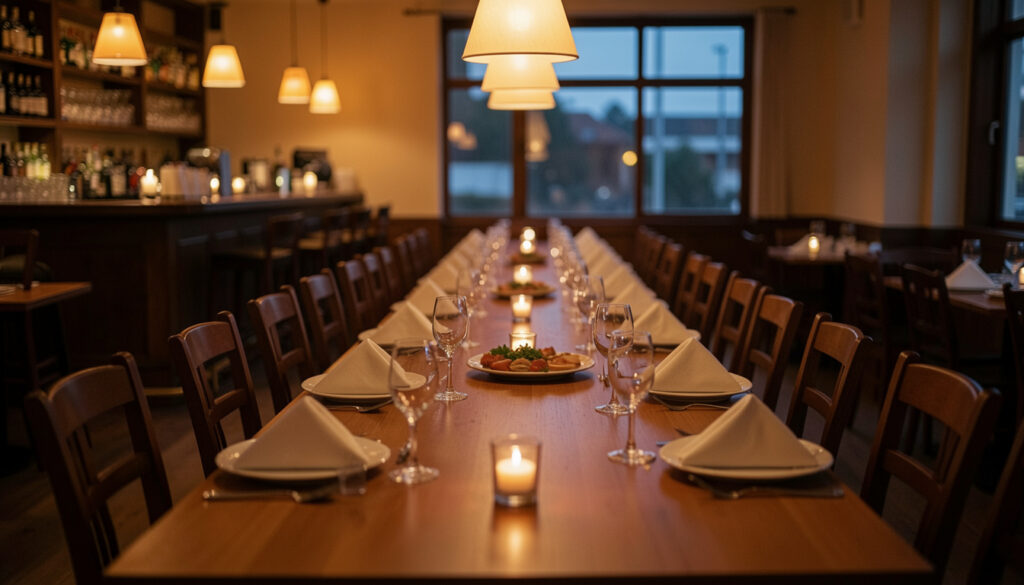
A guest texts on a Tuesday night: fourteen people, Saturday, a birthday. Can you fit them? The answer depends on rules that mostly live in your head, like how many seats the back room holds, whether you take a deposit and whether big groups order from a set menu. A large party reservation policy puts those rules in writing, so every guest hears the same answer no matter who picks up or when they ask.
This guide covers what to put in the policy, how to word it so guests actually take it in, and how to make sure they hear it before they invite everyone.
What a large party reservation policy should cover
Most policies are written for the kitchen and skip the guest’s questions. Start with the decisions. The wording comes after.
- Where “large” starts. Pick the party size at which your floor and kitchen have to plan differently. That line depends on your tables and your menu, not on what the place down the street does.
- How to book. Online, by phone, or only through a manager above a certain size. Say which.
- Notice. How far ahead a group needs to book, and whether same-day groups are possible at all.
- Deposit and cancellation. Whether you hold the table with a deposit or a card, the deadline to cancel or change the headcount, and what happens after that deadline.
- Menu. The full menu, a set menu, or pre-orders for groups above a certain size.
- Time at the table. If large parties get a seating window on busy nights, say so up front.
- The check. One check, split checks, or a limit on how many cards.
- Service charge. If you add one for large parties, state it before the guest books. Ask your accountant how your state treats it before you add it.
- Outside items. Cakes, decorations, wine, and any fee that comes with them.
- Limits. Nights or sizes you do not take, such as no large groups on Friday and Saturday.
Write the policy as answers, not rules
Guests rarely read a policy page. They ask questions, and it is the same handful every time:
- “Can you fit fourteen people on Saturday at seven?”
- “Do you need a deposit for a group?”
- “Can we split the check?”
- “Can we bring our own cake?”
- “What if a few people cancel the day before?”
Write the answer to each one in one or two plain sentences, the way your best host would say it on the phone. That version becomes your policy page, the script your staff repeat and the reply a guest gets in a text. It works the same way as a restaurant FAQ built from the questions guests ask every day: start from what people ask, not from what you want to announce.
Something like this reads well out loud and in a message:
We can seat your group of fourteen on Saturday. For groups that size we hold the table with a card, ask for the final headcount two days ahead and serve our set menu. A service charge is added to the check.
Four facts, no legal language, nothing the guest has to look up later.
Why the surprise hurts more than the rule
Deposits, set menus and service charges are common for groups. What guests push back on is hearing about them late, after the invitations went out. In one local news report, a station employee trying to book a party of eight at a New Jersey restaurant was told the group needed a $1,000 deposit and a signed contract. Whether a rule like that feels fair depends a lot on when and how the guest hears it.
The same logic applies to cancellations. A no-show policy only works when guests hear it before they commit, not in the fine print of a confirmation. So the first answer to “can you fit fourteen?” should carry the deposit, the deadline and the menu along with the yes.
Large party reservations arrive on every channel
The person organizing the dinner calls during the rush, texts the next morning, sends a direct message on social that night and asks a cousin to check on WhatsApp in Spanish. Each of those is a chance for a different person on your team to give a slightly different answer, or no answer. If the phone is the main problem, our post on reservation calls during the dinner rush goes deeper.
This is where a large party reservation policy meets your front desk. Hello360 is an AI front desk that answers on the phone, by text message, on WhatsApp, on your website and on social, 24 hours a day, in English, Portuguese and Spanish. It answers from your knowledge base: your hours, menu, prices and rules. Put the large-party policy in your knowledge base, and the guest who asks at eleven at night hears the same deposit, deadline and menu as the one who calls at noon.
- Update once. When you change the headcount deadline, you change it in one place, and every channel starts saying the same thing.
- The booking goes to the table. It triages what the guest needs and routes it, and the reservation lands on your table map through OpenTable.
- It does not guess. When a question falls outside your knowledge base, it says so and points the guest to your team. The question comes back to you on a short list, so the answer can go into your knowledge base.
Some requests still need a person: a full buyout, a custom menu, a rehearsal dinner with special requests. Say in the policy which requests a manager handles, so guests know what to expect and who will follow up.
How to update your large party policy this week
- Pull the last few group requests from phone notes, texts and direct messages, and list what guests asked.
- Make the decisions from the list above with your chef and your floor manager.
- Write each answer in one or two sentences, in the words your host would use.
- Use the same wording on your website, in your reservation confirmations and in what your staff say.
- Put it wherever your calls and messages get answered, so the reply does not depend on who is on shift.
- Review it before your busiest group seasons, such as the holidays, graduations and office parties.
Make the policy the first answer
A good large party policy is short, decided in advance and heard before the guest books. The rules matter, but where and when guests hear them matters just as much. If you want to see your group rules answered on every channel, Book a demo. We load a piece of your real business, and you ask it what your guests ask, from the first question to the reservation.
Frequently asked questions
What counts as a large party at a restaurant?
There is no single industry line. A large party is whatever size makes your kitchen and floor plan differently, which depends on your table layout, your menu and your staffing. Pick that number, write it into your policy and use it the same way on every booking.
Should restaurants require a deposit for large parties?
Many restaurants hold group tables with a deposit or a card, because a large party that does not show leaves a big gap on a busy night. Whatever you choose, state the amount, the cancellation deadline and what happens after it before the guest books. Guests accept a deposit far more easily than a surprise.
Can a restaurant add a service charge for large parties?
Many restaurants add a service charge to large-party checks. If you do, tell guests when they book and repeat it on the menu or the check. Ask your accountant how your state treats the charge before you add it.
How do I make sure guests hear the large party policy?
Put the same wording everywhere a guest might ask: your website, your confirmations, your phone, your texts and your social messages. The first answer to a group request should include the deposit, the deadline and the menu, not just availability.
Can Hello360 answer large party questions?
Yes. Hello360 answers from your knowledge base, so if your large-party rules are there, guests get them on the phone, by text, on WhatsApp, on your website and on social, 24 hours a day, in English, Portuguese and Spanish. Reservations go to the table through OpenTable, and what it cannot answer goes to your team.