Restaurant reservation calls during the dinner rush
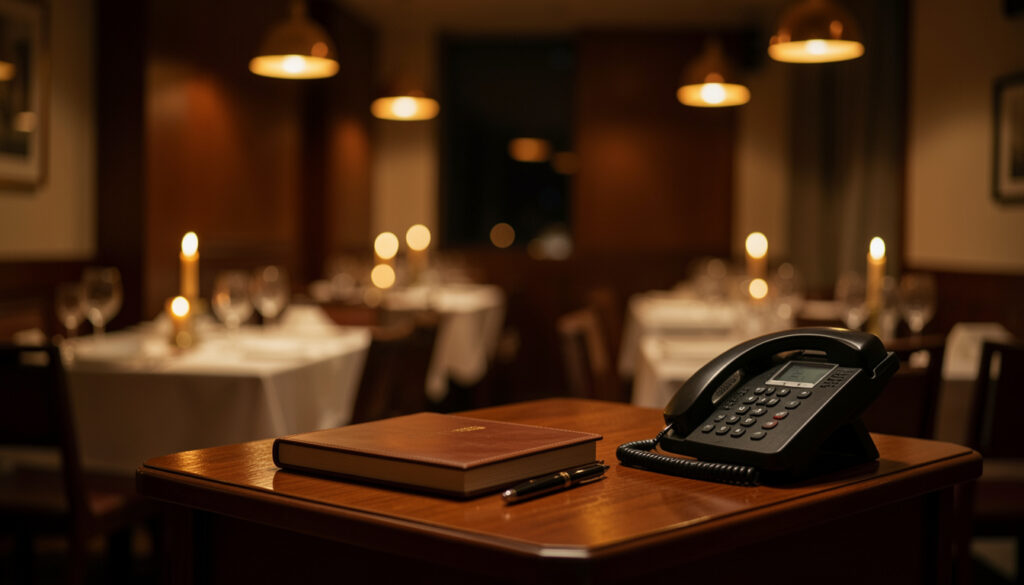
It is a Friday at 7:15. Your host is seating a large party, a server needs the manager, and the phone on the host stand keeps ringing. Restaurant reservation calls arrive at the exact hour nobody is free to take them, and a caller who gets no answer can simply dial the next place on the list. This guide covers what a good reservation call needs to capture, where it goes wrong during service, and how to keep booking tables without pulling anyone off the floor.
Why restaurant reservation calls still matter
Online booking is common, but the phone has not gone quiet. In a TouchBistro diner survey reported by FSR magazine, 63 percent of respondents said they make reservations by calling the restaurant, while 33 percent said they use platforms like OpenTable.
The same report points to the reason people keep calling: the guests who prefer the phone value being able to ask questions while they book. That is the part online forms cannot do well. A reservation call is rarely just “four people at eight.” It is four people at eight, one of them in a wheelchair, is the patio heated, and can we bring a cake.
So the call is two jobs at once: taking the booking and answering the questions that decide whether the guest books at all.
What every reservation call needs to capture
Whoever answers, the call should end with the same details every time. Write the list down once and make it the standard.
- Name and a callback number, so the table can be confirmed or moved.
- Party size, date and time, with a second-choice time if the first is full.
- Special notes: allergies, a birthday, a high chair, accessibility needs.
- Your rules, said out loud: deposits, the cancellation policy, the size at which a group becomes a large-party booking.
The last item is the one that slips during a rush. A rushed host books the table and forgets to mention the deposit, and the problem shows up on the night of the reservation.
The questions that ride along with a booking
Most reservation calls bring a few questions with them, and they are the same few every week. Are you open on Sunday? Where do we park? Do you have gluten-free options? Can we sit outside? Is there a dress code?
None of these is hard. The trouble is that the answer depends on who picks up. The host who started last week may not know that the patio closes in November, and the manager who knows is in the kitchen. Writing these answers down, next to your hours, menu, prices and rules, is a useful first step before you change anything else about how the phone is answered.
Where reservation calls go wrong during the rush
The hold that turns into a hang-up
“Can you hold, please?” is said with good intentions. Then a table needs the check, and the caller is still on hold. Some of them wait. Others book elsewhere.
The sticky-note booking
A reservation scribbled on a pad by the register is a reservation that may never reach the book. When it is missing on the night, the guest is standing at the stand and there is no table.
The after-hours voicemail
People plan dinner when they have time, which is often after you close. A voicemail left at 11 p.m. waits for the morning, and the caller has to wonder whether anyone heard it.
The answer that changes with who picks up
One person says large parties need a deposit. Another says they do not. Guests notice, and the staff ends up settling it at the table.
How an AI front desk handles restaurant reservation calls
Hello360 is an AI front desk that knows your business. It picks up the call, with no menu, no hold music and no “press 1,” and it says it is an assistant at the start of the call. Then it answers the question that was asked and asks for what it still needs.
Everything it says comes from your knowledge base: your hours, menu, prices and rules, including deposits and cancellations. It answers from that, not from the internet. When your knowledge base does not cover a question, it does not make up an answer. It points the caller to your team and adds the question to a short list for you, so the answer can go in next time.
When the caller wants a table, it takes down what the booking needs, and the booking lands on your table map through OpenTable. Each call is filed as a booking, a lead or a question, so nothing lives in one person’s memory. If you want to compare this approach with other options, our guide to choosing a restaurant phone answering service walks through what to look for.
It answers 24 hours a day, in English, Portuguese and Spanish. It replies in the language the caller speaks, without asking which one. You can see more about how the phone channel answers callers, including the questions people actually call to ask.
The same booking request, on every channel
Not every guest calls. Some text “Can we move it to Thursday?” Some send “¿Tienen mesa para cuatro esta noche?” on WhatsApp. Some ask “¿Aceptan reservas para el sábado?” in a direct message on your social account. Others ask in the chat on your website.
Hello360 answers on the phone, by text message, on WhatsApp, on your website and on social, and every channel reads the same source of truth. Update your holiday hours or your large-party rule once, in one place, and every channel starts saying the same thing. If WhatsApp is where many of your regulars write, our post on answering every WhatsApp chat at a restaurant goes deeper.
One thing worth knowing: each channel’s thread stands on its own. A guest who called and then texts starts a new conversation, so your details stay consistent because the answers come from one place, not because the channels share a history.
A quick checklist before your next Friday
- Write down the details every reservation call must capture, and share it with every host.
- List the questions guests ask while booking, with the answer to each.
- Put your rules in writing: deposits, cancellations, large parties, holiday hours.
- Decide what happens to a call nobody can take, during service and after closing.
- Make sure every booking ends up in one reservation book, not on a notepad.
Answer the call without leaving the floor
Restaurant reservation calls are guests who already want to eat with you. The job is to answer them with the right details, take the booking the same way every time and keep your staff with the guests in the room. Book a demo and watch a reservation call handled with your own hours and rules. For restaurants, the demo shows the conversation and the reservation.
Frequently asked questions
How should a restaurant handle reservation calls during a busy service?
Decide in advance who answers the phone during service, and give that person a fixed list of details to capture and rules to mention. Keep the answers to common questions written down so they do not depend on who picks up. Another option is to send the calls to someone who is not working the floor.
What information should you take on a restaurant reservation call?
At minimum: the guest’s name, a callback number, party size, date and time. Add special notes such as allergies, celebrations, high chairs or accessibility needs. Then state your deposit and cancellation rules before the call ends, so there are no surprises on the night.
Do diners still book restaurant tables by phone?
Many do. In a TouchBistro survey covered by FSR magazine, 63 percent of respondents said they make reservations by calling the restaurant. Guests who prefer the phone said they value being able to ask questions while they book.
Can Hello360 put phone reservations into OpenTable?
Yes. OpenTable is one of the integrations Hello360 offers for restaurants, and a booking taken in the conversation lands on your table map through it. You can see the conversation and the reservation in a demo.
What happens when a caller asks something the AI front desk cannot answer?
Hello360 answers only from your knowledge base, so it does not guess. When a question falls outside it, it points the caller to a person on your team and adds the question to a short list for you. Once you add the answer to your knowledge base, every channel can use it.