Bilingual answering service for car dealerships
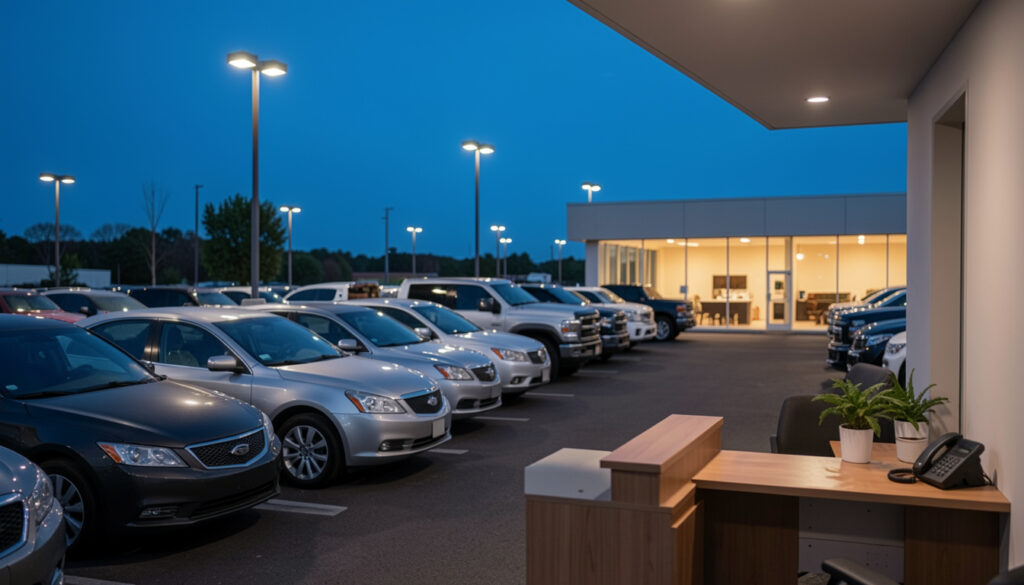
A shopper sees a used truck on your site at ten at night and calls to ask if it is still on the lot. He asks in Spanish. What happens next depends on who, or what, picks up. A bilingual answering service for car dealerships exists to close that gap: the call, text or message gets a real answer in the language it arrived in, and the interest reaches your sales team as a lead instead of a voicemail nobody can follow up on.
This guide covers what that service should actually handle, where in-house bilingual coverage tends to break down, and the questions worth asking before you pick one.
Why language matters at a dealership
Spanish is not a niche language for a U.S. dealership. According to the U.S. Census Bureau, 67.8 million people spoke a language other than English at home in 2019, and Spanish was the language for 62% of them. The same Census report found that 39% of people who spoke Spanish at home spoke English “less than very well.”
That second number matters on the phone. A car is a large purchase with financing, trade-ins and warranty terms attached. Even a customer who gets by in English at the grocery store may want the details in Spanish before driving across town. And plenty of fully bilingual buyers simply feel more at ease asking in the language they use at home.
Your team already knows this. The problem is coverage. The bilingual salesperson is with a customer, on a test drive or off for the day, and the call that needed them rings through to a recording.
What a bilingual answering service for car dealerships should handle
Answering in Spanish is the starting point, not the whole job. The service is only useful if it can answer the questions your customers actually ask.
Questions about a specific car
Many sales calls are about one vehicle: is it still available, what is the price, what are the miles, can I come see it Saturday. A good answer comes from your current inventory, not from a script written months ago. If the service cannot see what is on the lot, it can only take a message.
Service department calls
“¿Cuánto cuesta el cambio de aceite?” is a service question, and it deserves a direct answer with your price and your hours. When the answer depends on the vehicle or needs a person, the service should take down what a callback needs and pass it on.
Nights, weekends and holidays
Shoppers browse after work and on Sundays. A bilingual answering service that only covers business hours misses the moments when people have time to look.
Language switching mid-conversation
Real conversations do not stay in one language. A customer may start in English and switch to Spanish when the talk turns to financing, or a family member may take the phone halfway through. The service should follow the customer, not ask them to pick a language and stick to it.
A clear handoff when it does not know
The outcome to avoid is a confident wrong answer about price or availability. The service should say when it does not have the answer and point the customer to your team, rather than fill the gap with a guess.
Where in-house bilingual coverage breaks down
At many dealerships, Spanish is covered by people, and the people are good. The gaps come from the setup around them.
- The phone tree. “Press 2 for Spanish” sends the caller to the same busy line, often to a voicemail box that gets checked tomorrow.
- One bilingual person per shift. When that person is with a buyer, every Spanish call waits.
- Information that drifts. Hours, specials and policies change. The English answer gets updated; the translated version on the website or in the call script often does not.
- The inbox nobody opens. Questions in Spanish or Portuguese arrive by text, on WhatsApp and in social messages, and they sit next to everything else until someone has time.
None of this is a staffing failure. It is what happens when a busy floor is also expected to be the front desk.
Bilingual on every channel, not just the phone
Buyers do not only call. They text the number on your sign, message you on WhatsApp, use the chat on your site and send a direct message about a car you posted. If the phone answers in Spanish but the website chat only works in English, the customer gets a different dealership depending on the door they used.
The answers should also match. If your Saturday hours change, the change should reach the phone, the texts and the chat at the same time, in every language, without someone updating each one by hand.
How Hello360 answers in English, Spanish and Portuguese
Hello360 is an AI front desk that knows your business: the inventory, the rules and the hours. It answers on the phone, by text message, on WhatsApp, on your website and on social, 24 hours a day, in English, Portuguese and Spanish.
- It follows the customer’s language. It replies in the language each question arrives in and switches when the customer does. On the phone channel, it speaks English, Portuguese and Spanish without asking which, with no menu, no hold music and no “press 1.”
- It is upfront. On a call, it says it is an assistant at the start.
- It answers from your knowledge base. Your hours, prices and stock, not the internet. When your knowledge base does not say it, it does not make it up. It tells the customer, points them to your team and lists the question for you, so the answer can go into your knowledge base.
- It shows the car. In the website chat, the vehicle appears inside the conversation with its real details, read from your inventory feed. A search typed in Spanish finds what one typed in English finds.
- It routes the lead. The conversation becomes a lead with a name, a contact and a vehicle of interest, ready for the sales team. Leads go to your CRM through Zapier.
- One update, every channel. Everything comes from one source of truth. You update it once, in one place, and every channel starts saying the same thing, in all three languages.
Portuguese is not an afterthought either. For some of your customers it is the language they grew up with, and the reason Hello360 exists is that nobody who reaches out to a business should be left without an answer.
Questions to ask before you choose a service
Whatever you evaluate, these questions separate a translated voicemail from a front desk that can actually help a buyer.
- Does it answer in the customer’s language without a menu or a transfer?
- Does it answer from your real inventory, prices and hours?
- Can it switch languages in the middle of a conversation?
- What does it do when it does not know the answer?
- Does it cover texts, WhatsApp, website chat and social messages, or only calls?
- Where does the lead go, and does it arrive with the vehicle the customer asked about?
- Does it tell callers it is an AI?
Ask to see it work with your own business. A demo built on someone else’s inventory tells you very little about how it will handle your Saturday calls.
Conclusion
A bilingual answering service for car dealerships earns its place when it answers the way a good bilingual salesperson would: in the customer’s language, with your actual inventory and hours, and with a lead your team can act on. Hello360 does that on every channel, around the clock, in English, Spanish and Portuguese. To see the conversation, the inventory in the widget and the lead reaching the CRM: Book a demo.
Frequently asked questions
What is a bilingual answering service for a car dealership?
It is a service that answers customer calls, and ideally texts and messages, in more than one language, usually English and Spanish. For a dealership, it should answer questions about inventory, prices, hours and service, and pass interested buyers to the sales team. Hello360 does this in English, Spanish and Portuguese, 24 hours a day.
Can an AI front desk switch languages during a call?
Hello360 replies in the language each question arrives in and switches when the customer does. On the phone, it speaks English, Portuguese and Spanish without asking the caller to choose. There is no “press 2 for Spanish” menu.
Do we still need Spanish-speaking staff?
Yes. Hello360 answers from your business information and routes leads, but closing a sale, working a trade-in or handling a question outside your knowledge base is still your team’s job. When it cannot answer, it tells the customer and points them to a person on your team.
How much does a bilingual answering service cost?
Pricing varies by provider and by what is included. Hello360’s price is not published on the site yet; you can ask about it when you book a demo. Phone, text message, WhatsApp, website and social come together in Hello360 and are not bought separately.
Does Hello360 work with our dealership CRM?
Hello360 sends leads to the business’s CRM, and Zapier is the integration available for it. Tell the team which CRM you use when you book a demo.