Dealership test drive requests: what to capture
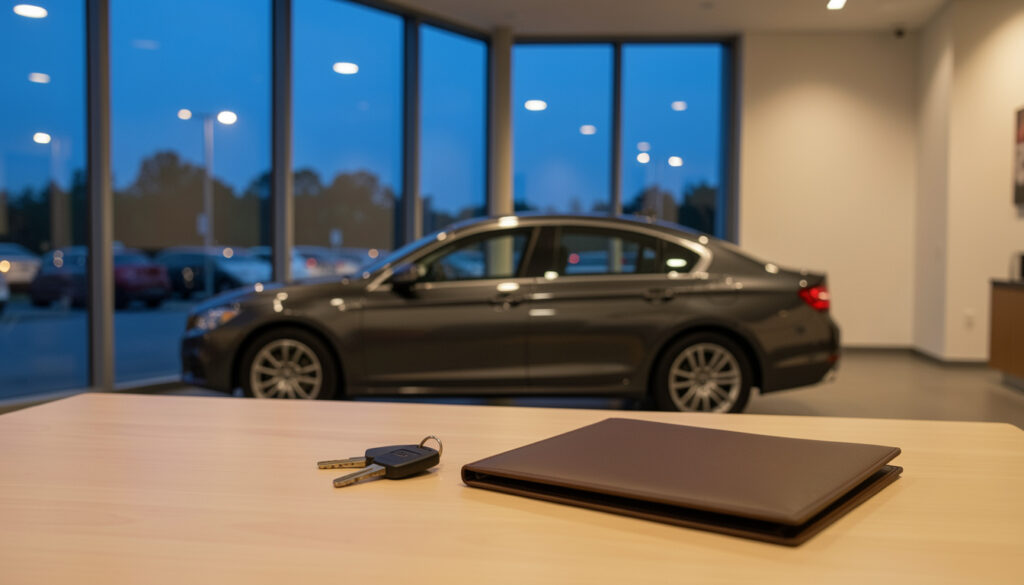
Dealership test drive requests rarely arrive in a tidy form. One buyer calls at lunch to ask if the blue SUV is still on the lot. Another texts at 10 pm: can I drive it Saturday? A third sends a DM about a truck from last week’s post. Each one is a person who has already narrowed the search to your store, and each one needs the same few details captured before anyone hands over keys.
This guide covers what a test drive request should collect, where these requests come from, which rules to write down first, and how an AI front desk can answer the buyer’s questions and pass a complete request to your sales team.
Why test drive requests deserve their own process
A test drive request is not a general inquiry. The buyer has picked a vehicle, or a short list, and wants to sit in it. That is a later stage than “what SUVs do you have.”
It also asks something of the lot. Mazda’s guide to test-driving a car tells shoppers that a vehicle takes time to prep for a drive, because the dealership may need to bring it in from a backlot, a showroom or a remote garage. The same guide advises buyers to tell the dealer which car they want to drive. When a request arrives without that detail, the buyer waits on the showroom floor while someone looks for keys.
Buyer advice points the same way. Edmunds suggests that shoppers call ahead, name the vehicle they want to test-drive and ask whether it is still in stock. So the first question in almost every test drive request is availability, and the answer has to come from your actual inventory. We covered that question on its own in how to answer “is this car still available?”
What to capture on every dealership test drive request
Whoever takes the request, whether a salesperson, the BDC or an AI front desk, should end with the same short list. Agree on it once, so every channel collects it the same way.
- The exact vehicle. Stock number or VIN when the buyer has one. Otherwise year, make, model, trim and color, matched against your inventory.
- Availability, confirmed. Whether the car is on the lot, in transit or sold, and a similar unit if it is gone.
- A preferred day and time. Ask for a second option too, so your team can confirm without another round of back-and-forth.
- A name and a way to reach them. Note the channel they prefer. The buyer who texted may not want a call.
- The language of the conversation. If the request came in Spanish, the confirmation and the salesperson on the floor should be ready for that.
- Trade-in and financing questions. Not to answer them on the spot, but so the right person is ready when the buyer walks in.
Where test drive requests come from
Buyers ask in whatever channel they were already using. A call from the road. A text sent from the driveway. A WhatsApp message. A question in the chat window on a vehicle detail page. A DM under a post.
Some of them arrive after the showroom closes. A request that waits until morning is one the buyer was free to send to another store in the meantime.
The fix is not a separate process for every channel. It is one list of what to capture, one set of rules, and one place for the finished request to land.
How an AI front desk handles test drive requests
Hello360 is an AI front desk that runs today at car dealerships and restaurants. It answers on the phone, by text message, on WhatsApp, on your website and on social, 24 hours a day, in English, Portuguese and Spanish. Here is what that looks like when the question is a test drive.
It answers about the car first
It answers from your knowledge base (your hours, inventory, prices and rules) and nothing else. When your knowledge base does not say it, it does not make it up. In the website chat, the vehicle shows up inside the conversation with its real details, read from your inventory feed. A search typed in Spanish finds what one typed in English finds.
It asks for contact details when the conversation has earned it
There is no form on arrival. The contact is asked for once the buyer has gotten real answers. By text message and on WhatsApp, it asks once for what a booking or a callback needs, and in a text thread it confirms what the customer asked for. On the phone, it says it is an assistant at the start of the call, answers from your hours, prices and stock, and takes down what a callback or a booking needs.
It routes the request to your CRM
The conversation becomes a lead with a name, a contact and a vehicle of interest, ready for the sales team. The lead goes to your CRM through Zapier, so nobody retypes a note from a voicemail. For what should happen once it lands, see why dealership lead management starts at the first answer.
It hands off what it cannot answer
When a buyer asks something your knowledge base does not cover, such as what their trade-in is worth, it says so and points them to your team. The question also comes back to you on a list, so the answer can go into your knowledge base.
Rules to write down before the next request
An AI front desk can only repeat the rules you give it. So can a new hire. Write these down once:
- When test drives happen. Days and hours, and whether walk-ins are welcome or drives are by appointment.
- What the buyer brings. A driver’s license, proof of insurance, or whatever your store requires.
- Who can drive. Age limits, co-drivers, and whether a salesperson rides along.
- Which cars can be driven. How you handle in-transit units, demos and cars already on hold.
- How far and how long. Your standard route or time limit, and whether you offer extended drives.
- Who confirms. The person or team that turns a request into a booked time.
Once the rules live in one place, you update them once and every channel starts saying the same thing. If test drive hours change for a holiday weekend, the phone, the text thread and the website chat all give the new answer.
The part that stays with your team
Capturing a request is not the same as booking it. Someone on your sales team still checks the car, confirms the time, and has it pulled up and ready. What changes is the starting point: a complete request in the CRM instead of a voicemail that says “call me back about the truck.”
- Confirm in the channel the buyer used. If they texted, text back. If they wrote in Portuguese, answer in Portuguese.
- Prep the car from the request. The stock number and the preferred time tell the lot what to pull and when.
- Close the gaps. Every question that went to your team is one you can answer in your knowledge base, so the next buyer gets it right away.
Turn test drive requests into booked drives
Dealership test drive requests are buyers raising their hand. Capture the same details on every channel, write your rules down, and let your team spend its time on the drive instead of on phone tag. Book a demo to see the conversation, the inventory in the website chat and the lead reaching the CRM.
Frequently asked questions
What should a dealership ask when someone requests a test drive?
Start with the exact vehicle and confirm it is available. Then collect a preferred day and time, a name, a way to reach the buyer and the channel they prefer. Note the language they used and any trade-in or financing questions, so the right person is ready.
Can an AI front desk schedule a test drive?
With Hello360, the AI front desk answers questions about the car and takes down what a callback or a booking needs. The conversation becomes a lead with a name, a contact and a vehicle of interest, sent to your CRM through Zapier, and your sales team confirms the time. You can see that flow when you book a demo.
What documents do you need for a test drive?
Each dealership sets its own requirements, which is why buyer guides tell shoppers to ask ahead. Whatever your store requires, such as a driver’s license or proof of insurance, write it into your knowledge base. That way the phone, text, WhatsApp, website chat and social all give the same answer.
Can buyers request a test drive after the showroom closes?
Yes, as long as something is there to answer them. Hello360 answers 24 hours a day, in English, Portuguese and Spanish, so a request sent at night is answered and filed as a lead instead of waiting in voicemail. Your team picks it up in the CRM.