Dealership lead management starts at the first answer
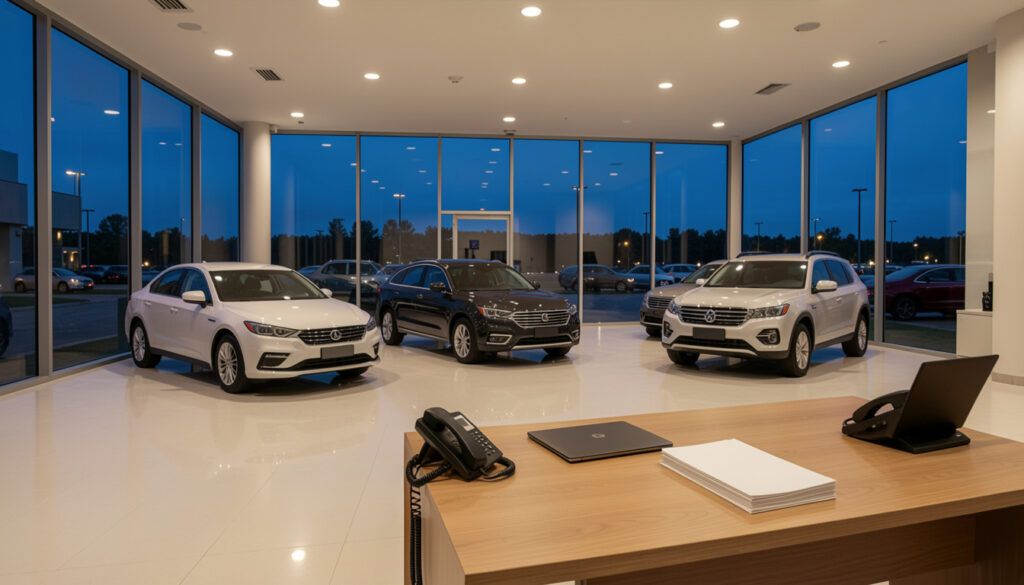
Dealership lead management usually gets discussed as a CRM problem: which tool, which rotation, which follow-up cadence. But many leads are won or lost one step earlier, in the first conversation. Someone asks about a car on the phone, in a text or in a DM, and what happens next decides whether your sales team gets a lead it can work or a note nobody can read.
What dealership lead management really covers
On paper, lead management is the path from first inquiry to sold or lost. In practice, it has four jobs:
- Capture. Every inquiry is answered and recorded, whatever the hour and whatever the channel.
- Triage. Someone, or something, decides what the person actually needs: a car, a service visit, a document, a simple answer.
- Routing. The inquiry reaches the person who can act on it, with enough detail to act.
- Follow-up. That person picks it up and moves it forward.
A CRM is built for the last two. The first two happen at the front desk, and that is where the gaps tend to be.
Where leads get lost before they reach the CRM
Few leads are lost because a salesperson ignored them. They are lost because they never arrived in a form anyone could work.
- After hours. McKinsey’s look at US auto retail found that 56 percent of new leads come in after hours, and just 37 percent of dealerships address those leads within one hour. By morning, the shopper who wrote at 10 pm may already be talking to someone else.
- The note that has to be retyped. Someone writes “asking about the blue truck, call back” on a pad. By the time it reaches the CRM, the name is misspelled and the number is missing a digit.
- The DM read as a comment. “Is this one still available?” sits in a social inbox next to spam, opened when someone remembers the account exists.
- The thread on one phone. A text conversation lives on whoever holds the store phone, so nobody else can see what was promised.
None of these show up in a CRM report, because none of them made it into the CRM.
Triage: not every conversation is a lead
Good dealership lead management sorts before it routes. A front desk hears the same handful of questions every day, and they do not all belong in the sales pipeline:
- “Do you still have the blue one on the lot?” is a buying question. It is a lead, and it should reach sales with the vehicle attached.
- “Are you open on Sunday?” is a question. It needs an answer, not a salesperson.
- “Can I speak to someone about my invoice?” needs a person on your team, but not a slot in the sales queue.
- “Are you hiring?” is not a customer at all.
When everything is logged as a lead, the sales team learns to ignore the queue. When nothing is, buying questions disappear into the general inbox. Triage keeps both from happening: answer what can be answered, file buying questions as leads, and hand the rest to the right person.
What a usable lead record needs
A lead is only as good as what the salesperson can do with it on the first callback. At minimum, that means:
- A name and a way to reach the person, captured as given, not reconstructed from memory.
- The vehicle of interest, specific enough to pull it up: the car they asked about, not “an SUV.”
- What was actually asked, so the salesperson does not open with a question the shopper already answered.
- Where it came from, so you know which doors are bringing in buyers.
Timing matters too. Asking for a phone number before answering anything feels like a toll booth; asking after answering a question about a specific car feels like service. The contact request should come when the conversation has earned it.
Routing dealership leads into the CRM without retyping
Every time a person copies a lead from one place to another, something slips: a digit, a trim level, the fact that the shopper prefers Spanish. The goal of routing is that the conversation becomes a CRM record directly, so the salesperson’s first touch is a follow-up, not data entry.
Rules to agree on before any tool goes in
- Who owns after-hours leads. Decide whose queue a 10 pm lead lands in, and when it gets picked up.
- What counts as a follow-up. An automated acknowledgment is not a salesperson’s call. Define what the first human touch is.
- Where non-sales requests go. Service, billing and parts questions need an owner too, or they come back as complaints.
- How duplicates are matched. The same shopper may call on Monday and text on Tuesday. Decide how your team spots that in the CRM.
- Who reads the questions nobody could answer. They are the clearest signal of what your front desk does not know yet.
If you are deciding which of these tasks stay with your team, our post on what a dealership BDC can hand to an AI front desk goes deeper.
How Hello360 fits into dealership lead management
Hello360 is an AI front desk that takes on the first two jobs, capture and triage, and passes the lead to your CRM for the rest. It answers on the phone, by text message, on WhatsApp, on your website and on social, 24 hours a day, in English, Portuguese and Spanish.
It answers from your knowledge base: your hours, inventory, prices and rules. On your site, it shows the vehicle inside the chat, read from your inventory feed, and a search typed in Spanish finds what one typed in English finds. When your knowledge base does not have the answer, it does not make one up.
Then it sorts. Every conversation is filed as a lead, a booking or a question. Someone who calls or writes at two in the morning about a car becomes a lead with a name, a contact and a vehicle of interest, ready for the sales team. On social, a buying question is filed as a lead with what was asked attached, instead of being read as a comment.
From there, the lead goes to your CRM through Zapier, so nobody retypes a note. What it cannot answer goes to a person on your team, and the questions it missed come back to you as a list, so the answer can go into your knowledge base.
One honest limit: each channel’s thread stands on its own. If the same shopper calls and later texts, those are two conversations, which is why the duplicate rule above matters.
If speed is your main concern, our post on why dealership lead response time is about more than speed covers what a fast answer still needs. For the website side, see what car dealership website chat should do.
A weekly review that keeps it working
- Read the list of unanswered questions and add the answers to your knowledge base.
- Check that your hours, prices and rules are current. Update them once and every channel follows.
- Spot-check a few leads from the week: did each one have a name, a contact and a vehicle?
- Look for anything filed as a question that should have been a lead, and the other way around.
Lead management starts at the front desk
Your CRM can only route what reaches it. Dealership lead management works when every conversation is answered, sorted and handed off with the details intact, at noon and at 10 pm alike. If you want to see the path from first question to CRM record with your own inventory, Book a demo. For dealerships, it shows the conversation, the inventory in the widget and the lead reaching the CRM.
Frequently asked questions
What is lead management at a car dealership?
It is the process of capturing every sales inquiry, deciding what each person needs, routing buying questions to the right salesperson and tracking follow-up until the deal is sold or lost. The CRM handles the tracking. Capture and triage happen wherever the customer first reaches you: a call, a text, a chat or a DM.
How should a dealership handle leads that arrive after hours?
Answer them when they arrive, capture a name, a contact and the vehicle of interest, and put them in a queue someone owns when the store opens. Decide in advance who that is and what the first human follow-up looks like. Hello360 answers 24 hours a day and turns a buying question into a lead for your sales team.
Can an AI front desk send leads to our existing CRM?
Hello360 sends leads to the business’s CRM, and Zapier is the integration available for it. Tell us which CRM you use when you book a demo. The dealership demo shows the lead reaching the CRM.
Does Hello360 answer car shoppers in Spanish?
Yes. It answers in English, Portuguese and Spanish, replying in the language each message arrives in. In the website chat, a vehicle search typed in Spanish finds what one typed in English finds.