Dealership social media leads: answer every DM
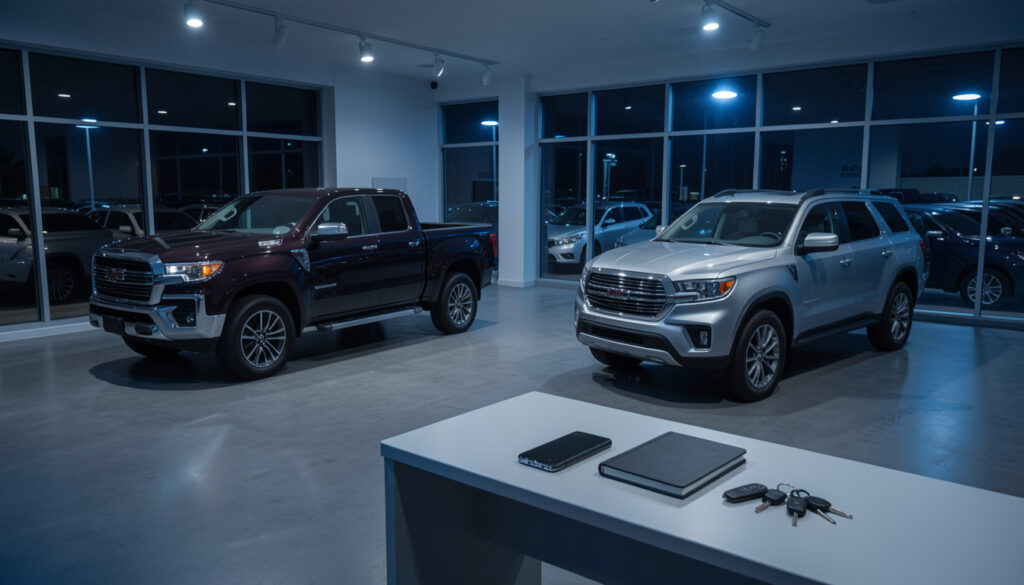
Dealership social media leads rarely look like leads. They show up as a two-line message under a photo of a truck, sent from a phone late at night: “Is this one still available?” Nobody filled out a form, nobody called, and the person who posted the photo has gone home. If that message sits until Monday, the shopper has had a whole weekend to ask another store the same question. This guide covers how to run the social inbox as part of the sales floor: what people send, what a useful reply looks like, who should take over, and how the conversation reaches your CRM.
Why dealership social media leads get lost in the inbox
Social accounts are usually run by whoever handles marketing, and that person is rarely the one who knows today’s price on a specific unit. The posts do their job and make people curious. The questions that follow land in an inbox that gets opened when someone remembers to check it, next to spam and job inquiries.
Shoppers also expect an answer sooner than many stores give one. In Sprout Social’s Q3 2026 pulse survey of 2,250 consumers, 68% said they expect a brand to respond within 24 hours, 24% expect a reply in 1 to 2 hours and 14% expect one in under an hour. That survey covers customer care in general, not car buying. There is little reason to think someone asking about a car they saw on your page is more patient.
Speed alone does not fix it, though. A fast reply that says “call us” or “DM us for details” still leaves the shopper without an answer. We made the same point about forms and calls in dealership lead response time: the reply that counts is the one that answers.
What shoppers actually send
Read a month of messages on any dealership account and the same few types repeat. Each one deserves a different next step.
- Availability: “Is this one still available?” This is a buying question. It should be answered with what is actually on the lot today and treated as a lead.
- Price: “What are you asking for the one you posted yesterday?” Answer with the price your store has decided to share, and say what it includes if your rules require that.
- Trade-ins and financing: These usually need a person. The reply should collect what that person will need and say who will follow up.
- Hours and location: Simple questions that should never wait for a salesperson.
- Service: A question for the service lane, not for sales. Route it there.
- Everything else: Job inquiries, comments about a post, spam. Answer or set aside, but keep them out of the sales queue.
A reply that moves the sale forward
Answer the question that was asked
If someone asks whether the silver SUV is still there, the reply says yes or no, and if it is gone, what similar units are on the lot. That only works when the person or system replying reads from your current inventory, not from the post that went up last week.
Ask for contact details once the conversation has earned it
Asking for a phone number before answering anything feels like a toll booth. Answer first. When the shopper asks about a test drive, a trade-in or a price breakdown, that is the moment to ask for a name and a way to reach them.
End with one clear next step
A visit time, a callback from a salesperson, or a link to the vehicle page. One option, stated plainly, so the shopper knows what happens next.
Sort before you answer
A dealership inbox needs triage, the same way a busy front desk does. Write down, in plain language, where each type of message goes:
- Buying questions become leads, with the vehicle of interest and what was asked attached.
- Questions that need a person, such as trade-in values, credit questions or complaints, go to a named role on your team with the conversation so far.
- Service questions go to the service department.
- Routine questions about hours, directions and stock get answered on the spot.
Public comments need a rule too. In the same Sprout Social survey, 55% of consumers said they would rather message a company directly than post a complaint publicly, and among those who do comment, 33% want a reply that moves them to a private message while 28% expect the issue solved in the comments. For a pricing or availability question under a post, a short public reply that invites the shopper to message the store keeps the details out of the comment thread.
Keep every answer in line with the lot
Inventory changes every day. A social reply that promises a car sold on Tuesday can do more damage than a slow reply, because the shopper drives in for something that is not there. The same goes for hours: if the phone says the showroom closes at eight and a social reply says nine, the customer stops trusting both.
The fix is to keep one source of truth for the facts every channel repeats: hours, inventory, prices and the rules your team follows. Update it once, and every answer follows.
Answer in the language the message arrived in
A shopper who writes in Spanish and gets an English reply may simply stop writing. If your market includes Spanish- or Portuguese-speaking customers, the social inbox needs to reply in their language, message by message. We go deeper on this in bilingual answering service for car dealerships.
How Hello360 handles dealership social media leads
Hello360 is an AI front desk that answers messages on the social accounts you connect, 24 hours a day, nights and weekends included. It answers from your knowledge base (your hours, inventory, prices and rules), the same one that guides every other channel.
- It answers with your business: your hours, your prices and your stock, and nothing else. When a question falls outside your knowledge base, it says so and points the customer to your team.
- It replies in the customer’s language: English, Spanish or Portuguese, in the language each message was written in.
- It reads a buying question as a lead: the thread is filed as a lead with what was asked attached, and the lead goes to your CRM through Zapier.
- It hands off with context: when a thread needs a person, it goes to your team with what was said attached.
- It tells you what it missed: unanswered questions come back to you as a list, so the answer can go into your knowledge base.
The social channel comes together with phone, text message, WhatsApp and website chat in Hello360. You can see what it does on social, and the questions people ask about it, on the social channel page.
Make the social inbox part of the sales floor
Every message about a vehicle is a shopper who already raised a hand. Answer it with what is really on the lot, in the shopper’s language, and send it to the person who can close it. To see the conversation and the lead reaching the CRM with your own inventory, Book a demo.
Frequently asked questions
How fast should a dealership respond to social media messages?
As fast as you can answer correctly. In Sprout Social’s Q3 2026 survey, 68% of consumers expected a response within 24 hours and 14% expected one in under an hour. That data covers customer care in general, so treat it as the floor for a shopper asking about a specific vehicle.
Should a dealership share prices in a direct message?
That depends on your store’s pricing rules, but a shopper who asks for a price and gets “call us” may move on. Decide in advance which prices can be shared and what should be said with them. Hello360 answers with the prices in your knowledge base and nothing beyond them.
How do social media messages get into a dealership CRM?
Without a system, someone has to copy the name and the question by hand, which is easy to skip on a busy day. Hello360 files a buying question as a lead with what was asked attached and sends it to your CRM through Zapier. Tell us which CRM you use when you book a demo.
Does Hello360 know what the same customer asked on the website or by phone?
Not as one conversation. Each channel’s thread stands on its own. What every channel shares is your knowledge base, so the answers stay the same wherever the customer asks.
Do we pay separately for the social channel?
No. Phone, text message, WhatsApp, website chat and social come together in Hello360; they are not bought or switched on separately. The price is not published on the site yet, so ask about it when you book a demo.